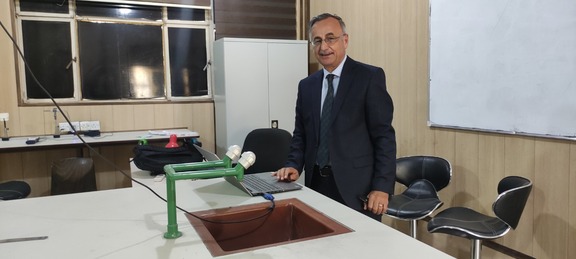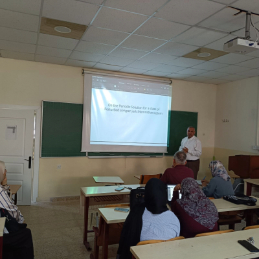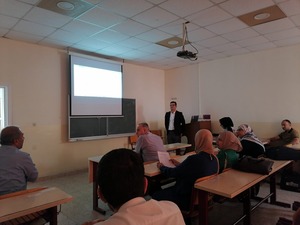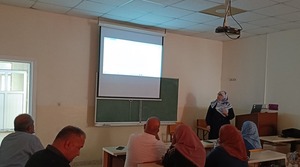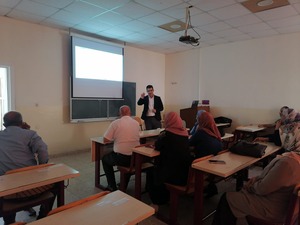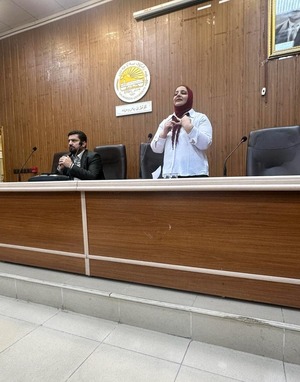

A weekly presentation was given to the English Department faculty members by (Asst. Prof. Shirin Kamal Ahmed) on Monday, April 21, 2025 at English Department.
This seminar explores the essential role of literature in ESL education, emphasizing how it enhances vocabulary, grammar, pronunciation, and overall language acquisition. Through theories like Structuralism and New Criticism, literature offers a meaningful context for learning, allowing students to internalize grammar and vocabulary in authentic ways. For example, works like Franz Kafka’s The Metamorphosis and T.S. Eliot’s The Love Song of J. Alfred Prufrock help students understand sentence structure, idiomatic expressions, and rhythm through close reading and analysis.
Beyond language mechanics, the seminar highlights how literature fosters cultural awareness and critical thinking. Literary theories such as Postcolonialism and Feminism allow learners to explore themes of identity, history, and social power. Texts like Chinua Achebe’s Things Fall Apart and Virginia Woolf’s A Room of One’s Own serve as gateways to understanding colonial legacies and gender dynamics, encouraging students to think deeply and question societal norms as reflected in language.
Finally, literature supports emotional engagement and creative expression. Reader-Response Theory and Postmodernism help students connect personally with texts, develop empathy, and explore multiple interpretations of meaning. Literature also builds confidence in communication by offering models of expressive writing and speaking, such as Shakespeare’s speeches or Emily Dickinson’s poetry. Overall, the seminar concludes that integrating literature and literary theory in ESL not only improves language skills but also cultivates critical awareness, emotional depth, and cultural insight.