Syriac Language
The Department of Syriac Language was established at the College of Education, Salahaddin University-Erbil, in 2016. It is a small department from which 10 to 20 students graduate with a BA degree every year. It also started an MA program in 2023 after having four groups of BA graduates. This department is very significant for Salahaddin University and the whole region because the Syriac language belongs to an indigenous group of people in the region, and teaching it particularly benefits this component. In fact, this language is one of the ancient languages through which a lot of information can be obtained about the region. Moreover, the Syriac Department is the first and only department that teaches this language academically in the Kurdistan Region; therefore, students join the department from all over the region, and students from Nineveh Plain have also joined it since 2020 to receive their academic degree in Syriac Language. We aim to have academic graduates who can teach the Syriac language professionally in governmental and non-governmental schools. We also work with other partners to prepare the students for working on manuscript preservation, conservation, digitization, cataloging, and metadata creation.
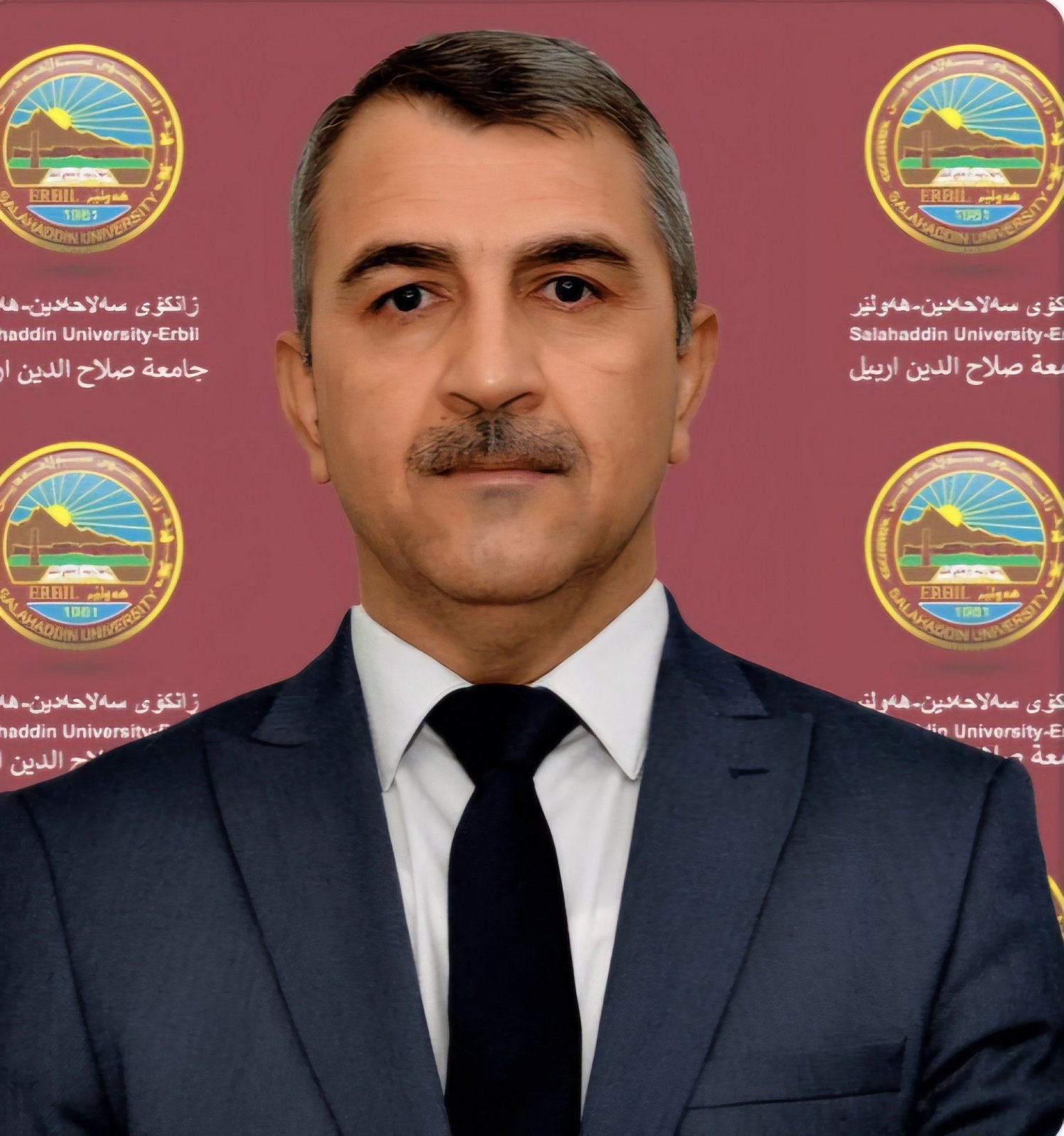
Dr. Kawther Najeeb Abdulahad Askar
Personal information:
- Name: Kawther Najeeb Abdulahad Askar.
- Nationality: Iraqi.
- Date and place of birth: 17 March 1975 Ankawa- Erbil.
- Sex: male.
- Civil status: married, 3 kids.
- Address: Erbil, Ankawa Mart Shmoni sq.
- Mobile No.: 00964 (0) 7504829251.
- E-mail address: [email protected].
The mission of the Department of Syriac Language is to work for the preservation, study, and promotion of the Syriac language and its cultural and historical significance. We are dedicated to offering comprehensive and high-quality education that empowers students to achieve proficiency in the Syriac language, understand its historical evolution, and appreciate its literary and cultural contributions.
VisionThe vision of the Department of Syriac Language is to become an internationally recognized center of excellence in Syriac studies, renowned for its innovative research, exceptional educational programs, and sincere commitment to cultural preservation. The department looks forward to accommodating the largest number of students to study in this department and be fully prepared academically. By realizing this vision, we aim to honor the legacy of the Syriac language, contribute to the richness of human cultural diversity, and inspire future generations to engage with and preserve this invaluable heritage.
Graduates from the Department of Syriac Language will:
- Demonstrate advanced reading, writing, and speaking skills in Classical Syriac and good knowledge of other semitic languages, namely Mandaic and Aramaic.
- Read and transcribe various Syriac scripts (Estrangelo, East Syriac, and West Syriac).
- Apply Syriac knowledge in careers such as teaching, translation, archival work, or cultural preservation.
- Promote the Syriac language and heritage in academic, church, or community contexts.
- Contribute to digitization or editing projects involving Syriac manuscripts.
- Conduct independent research using Syriac sources and academic methodologies.
- Critically evaluate scholarly arguments about Syriac texts, traditions, and identity.
Partnerships
The Department of Syriac Language has academic relations with similar departments in the world, and this helps the university to build academic ties with other universities. This includes two memorandums of understanding that the department worked to establish between Salahaddin University and other universities, namely one with the Catholic University in Erbil and another with Freie Universität Berlin.
Degree Program Overview
The Bachelor degree in Syriac Department at Salahaddin University – Erbil is a four-year academic program dedicated to the in-depth study of the Syriac language, its rich literary heritage, and its cultural and historical significance in Mesopotamia and the wider Middle East. The program is situated within the College of Education and plays a vital role in preserving and promoting Syriac linguistic and cultural identity in the Kurdistan Region and Iraq.
Postgraduate Studies
The Master’s Program in Syriac Studies at Salahaddin University – Erbil offers advanced academic training in the Syriac language, literature, and cultural history. It is designed for students who wish to deepen their linguistic proficiency, engage in original research, and contribute to the preservation and scholarly understanding of Syriac heritage in Iraq and the wider region. This program supports the broader mission of cultural revitalization and scholarly excellence in the Kurdistan Region.
Program learning outcome
- Demonstrate advanced reading, writing, and speaking skills in Classical Syriac and good knowledge of other semitic languages, namely Mandaic and Aramaic.
- Read and transcribe various Syriac scripts (Estrangelo, East Syriac, and West Syriac).
- Apply Syriac knowledge in careers such as teaching, translation, archival work, or cultural preservation.
- Promote the Syriac language and heritage in academic, church, or community contexts.
- Contribute to digitization or editing projects involving Syriac manuscripts.
- Conduct independent research using Syriac sources and academic methodologies.
- Critically evaluate scholarly arguments about Syriac texts, traditions, and identity.
Program learning outcome
Coming Soon
The Department Syriac Language offers two types of study options to ensure accessibility and flexibility for students, depending on their individual circumstances:
Zankoline (Government-Funded) Study Description: This option provides free tuition for students who qualify and are accepted through the general centralized admission system, known as "Zankoline." Eligibility: Applicants must meet the academic requirements set by the Ministry of Higher Education and Scientific Research.
Admission is competitive and based on high school performance.
Benefits:
Parallel Study (Self-funded)
Description: This option enables students who are not accepted through the Zankoline system to pursue their studies by paying tuition fees.
Tuition Fee: 2,500,000 IQD per year.
Eligibility:
Benefits:
Senior students and alumni junior students share experiences and advice to assist with academic and career decisions.
Graduate employability
Graduates from the Department of Syriac Studies are prepared to:
- Pursue advanced degrees in Syriac studies and Semitic languages.
- Teach Syriac language and literature in schools and academic institutions.
- Work in cultural preservation, manuscript research, or community outreach.
- Contribute to language revitalization and documentation projects.
These are a few relevant published articles from Syriac department:
- The Pausal Form in Neo-Aramaic Dialects.
- Establishing Morphological and Syntactical Terminology for The Standard Syriac Verb According to The Descriptive Approach.
- The Semantic Similarity between some Syriac and Arabic Vocabulary, the Letter (qōp-qāf) as a Model.
- Yohanna, S.S., (tr.), Classical Syriac with Chrestomathy, Erbil 2021, (in Arabic).
- Yohanna, S.S., “A Comparative Study of Syriac and Kurdish Phonemic Systems based on a Manuscript from Early 20th Century”, Zanco Journal of Humanity Sciences, Vol. 25, No. 5, 2021, pp. 348-359.
- Yohanna, S.S. & Askar, K.N., “Establishing Morphological and Syntactical Terminology for The Standard Syriac Verb According to The Descriptive Approach” ISIN Journal for Archaeology, History and Ancient Languages, Issue 3, 2022, pp.393-414.
- Yohanna, S.S., “Comparative Textual Criticism of the Peshitta of the Book of Psalms” Zanco Journal of Humanity Sciences, Vol. 27 No. s6 (2023) pp. 75-92: Second Arba'ilu International Conference on Syriac and Sureth Studies (2nd AICSSS 2023).
- Yohanna, S.S., & Ajim Q.S. “A field-study on describing the Syriac manuscripts preserved in the depository of the O.A.O.C.” Zanco Journal of Humanity Sciences, Vol. 27 No. s6 (2023) pp. 11-19: Second Arba'ilu International Conference on Syriac and Sureth Studies (2nd AICSSS 2023).
- لمى افريم خضر م. (2025). مفهوم التأديب في حكمة أحيقار وفي الأدب الحكمي للشرق الأدنى القديم. لارك, 17(1/Pt1), 826-794.
Research and publication
Research in the Syriac Language Department plays a vital role in preserving and revitalizing one of the oldest and most influential literary and liturgical languages of the East. The department serves as a center for interdisciplinary studies, combining linguistic analysis, historical inquiry, and manuscript studies. Syriac, a dialect of Aramaic, offers a unique window into Semitic philology, and the cultural heritage of the Middle East. Through critical engagement with classical texts, poetic traditions, researchers in this department contribute not only to academic knowledge but also to the living legacy of a language still used in various communities today. Here is a number of the published articles:
- The Pausal Form in Neo-Aramaic Dialects
- Establishing Morphological and Syntactical Terminology for The Standard Syriac Verb According to The Descriptive Approach.
- The Semantic Similarity between some Syriac and Arabic Vocabulary, the Letter (qōp-qāf) as a Model
- Yohanna, S.S., (tr.), Classical Syriac with Chrestomathy, Erbil 2021, (in Arabic).
- Yohanna, S.S., “A Comparative Study of Syriac and Kurdish Phonemic Systems based on a Manuscript from Early 20th Century”, Zanco Journal of Humanity Sciences, Vol. 25, No. 5, 2021, pp. 348-359.
- Yohanna, S.S. & Askar, K.N., “Establishing Morphological and Syntactical Terminology for The Standard Syriac Verb According to The Descriptive Approach” ISIN Journal for Archaeology, History and Ancient Languages, Issue 3, 2022, pp.393-414.
- Yohanna, S.S., “Comparative Textual Criticism of the Peshitta of the Book of Psalms” Zanco Journal of Humanity Sciences, Vol. 27 No. s6 (2023) pp. 75-92: Second Arba'ilu International Conference on Syriac and Sureth Studies (2nd AICSSS 2023).
Research groups
- The Digital Center of Oriental Manuscripts (CNMO) in Erbil.
- Cultural Center for the Preservation of Syriac Manuscripts (“Scriptorium Syriacum”)
- The Syriac Heritage Museum in Erbil.
Opportunities for students
Graduates of the Syriac Department at Salahaddin University – Erbil are equipped with unique linguistic, historical, and analytical skills that open doors to a wide range of academic, professional, and cultural careers:
- Teaching Syriac in schools.
- Employment in museums, heritage centers, or the media.
- Manuscript preservation and cataloging roles.
- Syriac-Arabic-English translation of a variety of texts.
- Editing or producing books, articles, or digital content related to Syriac culture.
- Participation in language documentation and preservation initiatives.
- Further academic research (M.A./Ph.D.) in Syriac language and literature.
- Scholarships or fellowships abroad in institutes specializing in Semitic and Oriental Studies
Academic Advising
The Department of Syriac Language is committed to supporting students throughout their academic journey by providing comprehensive academic advising services. These services ensure that students receive tailored guidance to achieve their educational goals and professional aspirations while maintaining academic success.
Internship Opportunities
The Syriac department does not provide any internship programs.
Career Services
The Department of Syriac Language is committed to supporting its students beyond the classroom by offering career services that help them prepare for the job market, develop professional skills, and connect with employment opportunities in fields relevant to Syriac language, culture, education, and research, and this includes:
- Help students and graduates identify career paths related to Syriac and heritage fields.
- Provide tools and training to develop job-readiness skills.
- Facilitate networking and professional connections with institutions, organizations, and employers.
Conferences and workshops
-The Syriac department has already held two international conferences and one workshop:
- - Salahaddin University-Erbil, Kurdistan-Iraq; the University of Cambridge, UK and the University of Heidelberg, Germany jointly held the “First Arba'ello International Conference and Workshop on Syriac and Sureth Language Studies” (1st AICSSS) on 9-13 Sept. 2017, Erbil, Kurdistan-Iraq.
- - Salahaddin University-Erbil/College of Education, French National Library, and Catholic University-Erbil held the “Joint International Workshop on Syriac Tradition and Manuscript Studies” on 23-27 September 2019.
- - Salahaddin University-Erbil, Kurdistan-Iraq; the University of Cambridge, UK, and the Freie Universität Berlin, Germany jointly held the “Second Arba'ilu International Conference on Syriac and Sureth Studies” (2nd AICSSS) on 21-22 June 2023, Erbil, Kurdistan-Iraq.
- - The Institute of Semitic Studies at Freie Universität Berlin, Germany, in cooperation with Salahaddin University-Erbil, Iraq/Kurdistan, is organising the “Third Arba'ilu International Conference on Syriac and Sureth Studies” in Berlin on 20-24 July 2025.
Department news
Coming Soon
Student news and activities
Coming Soon
Contact us
KRG, Erbil, Kikuk road.