
Kurdish Language
A Brief Summary about Department of Kurdish Language
Department of Kurdish Language was established in 1992. The department initially had 50 students and 4 lecturers. However, in subsequent years there was a significant progress in terms of the number of students and lecturers. It currently has 27 lecturers and 450 students. There are different scientific ranks within the academic staff ranging from assistant professors to professors. The academic staff consists of 21 male lecturers and 6 female lecturers. A great number of students have completed higher education (master's and doctoral) in this department. The department pays great attention to science and education. It has prepared many teachers for the Ministry of Education who have been trained with the weapons of education and science. Graduates of the Kurdish Department teach Kurdish language and literature in schools within the structure of the Ministry of Education in the Kurdistan Regional government. The Kurdish Department has also paid great attention to cultural activities since its establishment. Various conferences and seminars are held annually in the department. Thai is, several activities related to Kurdish language, literature and culture are held yearly and the talents of students of the Department are highlighted.
In the 2018-2019, Kurdish Language Department gave students another chance to study for a bachelor's degree in the evening.
There are also other scientific activities of the Kurdish Language Department including writing books and research on all outstanding topics related to Kurdish language, literature and culture.
Another Scientific activity is related to comparative work which is conducted in both literature and linguistics. In linguistics, comparisons are made with English language, and in literature, comparisons are made between Kurdish and Persian literature.
In 2000, for the first time, the department gave the opportunity to students to do their Masters and doctoral degrees.
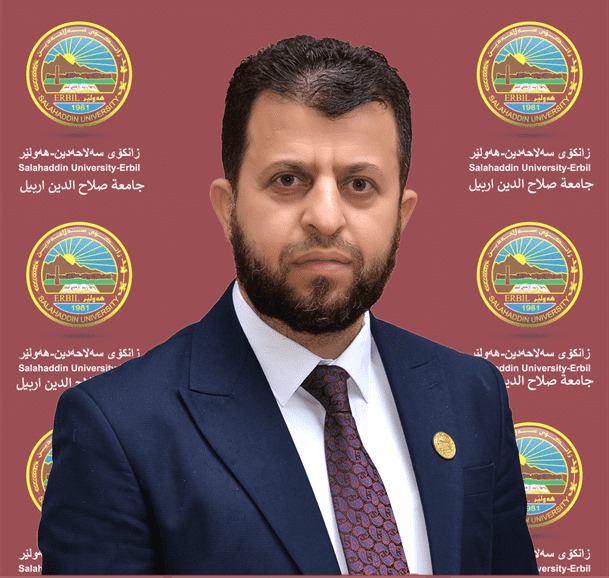
Assistant Professor Dr. Rebwar Muhammad Ismail
To foster profound knowledge and appreciation of Kurdish language, literature, and cultural heritage through comprehensive education, rigorous research, and critical analysis. We aim to develop skilled linguists, literary scholars, and cultural ambassadors who preserve, promote, and enrich Kurdish linguistic and literary traditions while preparing students to make meaningful contributions to academic discourse and society through their mastery of Kurdish language arts.
VisionTo be recognized as a center of excellence in Kurdish language and literary studies, where tradition meets innovation in exploring the rich tapestry of Kurdish cultural expression. We aspire to create an intellectually stimulating environment that cultivates deep understanding of Kurdish literary heritage while developing forward-thinking scholars who bridge historical knowledge with contemporary applications. Through our graduates' work, we seek to elevate Kurdish literature's status in global literary discourse and foster cross-cultural understanding and appreciation of Kurdish literary contributions.
Graduates of the Department of Kurdish Language and Literature are prepared to serve as highly qualified teachers of Kurdish language and literature. Here are the key points outlining the services they offer, potential workplaces, and expected learning outcomes
The Department of Kurdish Language and Literature offers a comprehensive undergraduate program designed to equip students with deep knowledge of Kurdish language, literature, and cultural heritage, along with the pedagogical skills needed to effectively teach these subjects at various educational levels. The program balances theoretical knowledge with practical teaching skills, preparing graduates to preserve and promote Kurdish linguistic and literary traditions while inspiring future generations.
Degree Program Overview
The Department of Kurdish Language and Literature offers a comprehensive undergraduate program designed to equip students with deep knowledge of Kurdish language, literature, and cultural heritage, along with the pedagogical skills needed to effectively teach these subjects at various educational levels. The program balances theoretical knowledge with practical teaching skills, preparing graduates to preserve and promote Kurdish linguistic and literary traditions while inspiring future generations.
Postgraduate Program Overview
Department of Kurdish Language and Literature at Salahaddin University-Erbil
The postgraduate program (Master's and potentially Ph.D., depending on the institution) in Kurdish Language and Literature aims to deepen students' theoretical understanding and professional expertise in Kurdish linguistics, literary studies, cultural heritage, and language preservation. The program prepares graduates to become advanced researchers, educators, cultural advocates, translators, and policy advisors in Kurdish language and literature fields.
Learning Outcomes
Graduates of the M.Sc. program will:
- Demonstrate comprehensive and advanced understanding of Kurdish linguistic structures, literary traditions, and cultural contexts.
- Apply advanced analytical methods to study Kurdish texts, oral traditions, and linguistic phenomena.
- Design and implement research projects relevant to Kurdish language and literature using appropriate scholarly methods and ethical standards.
- Critically evaluate Kurdish literary works within historical, social, and cultural frameworks.
- Communicate effectively in both Kurdish and academic languages through professional writing, translation, and oral presentations.
- Exhibit cultural sensitivity, scholarly integrity, and ethical responsibility in research and cultural preservation work.
- Collaborate effectively in interdisciplinary teams to address Kurdish language documentation and literary preservation challenges.
- Contribute to the development of Kurdish language education and cultural programs through innovation, leadership, and continuous scholarship.
Coming Soon
Admission Requirements – Ph.D. Program in Kurdish Language and Literature
• Master's degree in Kurdish Language and Literature or a related discipline (e.g., linguistics, comparative literature, Middle Eastern studies, anthropology).
• Proven research experience, preferably with publications in peer-reviewed academic journals or cultural publications.
• Submission of a detailed research proposal aligned with the department's areas of expertise and faculty research interests.
• Advanced proficiency in Kurdish and English, with additional language skills relevant to research area (e.g., Arabic, Persian, Turkish) preferred.
• Successful performance in the entrance exam and interview conducted by the department's admissions committee.
• Portfolio of academic or creative work demonstrating scholarly potential in Kurdish studies.
Graduate Employability
Department of Kurdish Language was established in 1992. The department initially had 50 students and 4 lecturers. However, in subsequent years there was a significant progress in terms of the number of students and lecturers. It currently has 27 lecturers and 450 students. There are different scientific ranks within the academic staff ranging from assistant professors to professors. The academic staff consists of 21 male lecturers and 6 female lecturers. A great number of students have completed higher education (master's and doctoral) in this department. The department pays great attention to science and education. It has prepared many teachers for the Ministry of Education who have been trained with the weapons of education and science. Graduates of the Kurdish Department teach Kurdish language and literature in schools within the structure of the Ministry of Education in the Kurdistan Regional government. The Kurdish Department has also paid great attention to cultural activities since its establishment. Various conferences and seminars are held annually in the department. Thai is, several activities related to Kurdish language, literature and culture are held yearly and the talents of students of the Department are highlighted.
In the 2018-2019, Kurdish Language Department gave students another chance to study for a bachelor's degree in the evening.
There are also other scientific activities of the Kurdish Language Department including writing books and research on all outstanding topics related to Kurdish language, literature and culture.
Another Scientific activity is related to comparative work which is conducted in both literature and linguistics. In linguistics, comparisons are made with English language, and in literature, comparisons are made between Kurdish and Persian literature.
In 2000, for the first time, the department gave the opportunity to students to do their Masters and doctoral degrees.
Admission Requirements – Ph.D. Program in Kurdish Language and Literature
• Master's degree in Kurdish Language and Literature or a related discipline (e.g., linguistics, comparative literature, Middle Eastern studies, anthropology).
• Proven research experience, preferably with publications in peer-reviewed academic journals or cultural publications.
• Submission of a detailed research proposal aligned with the department's areas of expertise and faculty research interests.
• Advanced proficiency in Kurdish and English, with additional language skills relevant to research area (e.g., Arabic, Persian, Turkish) preferred.
• Successful performance in the entrance exam and interview conducted by the department's admissions committee.
• Portfolio of academic or creative work demonstrating scholarly potential in Kurdish studies.
Services Offered to Society and Individuals
Research and Facilities
The Department of Kurdish Language and Literature provides a supportive environment for both theoretical and applied research. Faculty members are engaged in a wide range of research areas, including Kurdish linguistics, literary criticism, folklore documentation, translation studies, language preservation, and cultural heritage studies. The department emphasizes evidence-based scholarship and culturally responsive research that addresses real-world challenges in Kurdish language maintenance, literary development, and cultural preservation.
Research Focus Areas Include:
- Kurdish language documentation and corpus development.
- Contemporary Kurdish literary analysis and criticism.
- Kurdish oral tradition preservation and digital archiving.
- Comparative studies of Kurdish dialects and regional variations.
- Translation of significant works into and from Kurdish.
- Kurdish language education methodology and materials development.
- Cultural identity and literature in Kurdish diaspora communities.
- Integration of technology in Kurdish language learning and research.
Carrier opportunities
Graduates are qualified to work in diverse professional settings, such as:
The program is structured to include 120 ECTS over two academic years:
Coursework (60 ECTS): Advanced topics in Kurdish language and literature tailored to the student's area of specialization. These may include advanced Kurdish grammar and syntax, literary theory and criticism, Kurdish historical linguistics, translation methodology, research methods in literary studies, and comparative Kurdish literature.
Research Thesis (60 ECTS): An independent research project in the field of Kurdish language or literature, culminating in a thesis defense. The thesis demonstrates the student's ability to apply theoretical knowledge to real-world linguistic or literary issues through systematic investigation and original scholarship.
Graduates are qualified to work in diverse professional settings, such as:
Graduates of the Department of Kurdish Language and Literature are prepared to serve as highly qualified teachers of Kurdish language and literature. Here are the key points outlining the services they offer, potential workplaces, and expected learning outcomes:
Services Offered to Society and Individuals
- Kurdish Language Education: Teach standard Kurdish language skills including reading, writing, speaking, and listening. Promote Kurdish linguistic heritage and identity through formal education.
- Literary and Cultural Analysis: Interpret and analyze Kurdish literary texts across different historical periods and genres. Preserve and transmit Kurdish cultural traditions through literature.