
The Department of Physics at the College of Education, Salahaddin University-Erbil, was established during the academic year 1980–1981. Originally part of the University of Sulaimani, the department was relocated and re-established in Erbil, contributing significantly to physics education and research in the Kurdistan Region. The department offers a comprehensive academic environment, supported by:
What distinguishes the department is its:
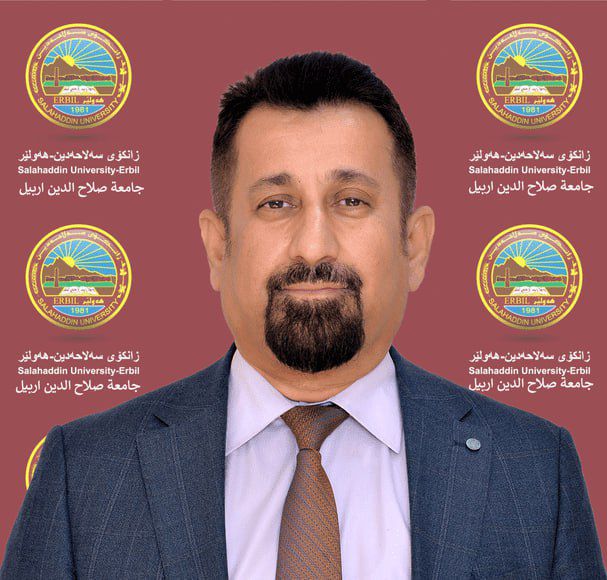
Professor Dr. Asaad Hamid Ismail
An expert in radiation biology and radiation oncology, Dr. Ismail has been leading the department since 2023. He holds a Ph.D. in Medical Physics from Universiti Sains Malaysia and has authored over 90 peer-reviewed articles. His work in radiation biology, medical applications, and biomedical physics has earned him 641 citations, an h-index of 15, and an i10-index of 24. He is actively involved in supervising theses, organizing conferences, and delivering advanced-level courses. Email:[email protected] Phone:009647504600048 Profile link: https://academics.su.edu.krd/asaad.ismail
To advance physics education and research through rigorous academic training, innovation, and community engagement. The department is committed to:
Over the next decade, the department aspires to: • Expand research in radiation, medical, and environmental physics
Graduates of the Physics Department will demonstrate: Skills and Competencies
Graduates are well-prepared for roles in academia, healthcare, environmental science, and industry.
Degree Program Overview
Undergraduate: Completion of secondary education and national entrance examPostgraduate Studies
Postgraduate: Degree in physics, transcript, recommendations, and entrance examProgram learning outcome
Graduates from the Department of Biology at Salahaddin University-Erbil will achieve the following learning outcomes upon successful completion of the General Biology or Biomedical Science programs:
- Comprehensive Knowledge Demonstrate extensive understanding of core biological concepts, including molecular biology, genetics, physiology, microbiology, botany, and zoology. This includes knowledge of living organisms’ structure, function, and interactions at molecular, cellular, organismal, and ecological levels.
- Critical Thinking and Problem-Solving Apply critical thinking skills and scientific reasoning to design experiments, collect and analyze data, and interpret findings. Graduates will be capable of solving biological problems and contributing to new scientific discoveries.
- Laboratory and Technical Proficiency Establish competency in laboratory procedures, including using contemporary biological instruments and technologies. This includes techniques in microbiology, molecular biology, genetics, histology, and biochemistry, ensuring readiness for research and professional practice.
- Ethical and Professional Conduct Uphold ethical standards and integrity in scientific research, laboratory work, and professional activities. Graduates will understand biosafety and biosecurity principles and apply them responsibly.
- Effective Communication Effectively communicate scientific information, findings, and concepts to diverse audiences through verbal presentations, scientific writing, and visual data representation. This includes writing research reports and presenting findings in professional settings.
- Career Readiness Pursue careers in medical laboratories, research institutions, pharmaceutical companies, quality control centers, and educational settings. Graduates will be equipped to contribute to disease diagnosis, prevention, treatment, and public health promotion.
- Lifelong Learning and Adaptability Engage in lifelong learning to stay current with advances in biological sciences and emerging technologies. Graduates will demonstrate adaptability to new scientific methods and concepts, fostering continuous professional development.
- Research Skills Conduct independent research and contribute to scientific progress by formulating hypotheses, conducting experiments, and analyzing results. Graduates will be prepared to pursue advanced studies or research-focused careers.
By achieving these outcomes, graduates from the Department of Biology will be well-prepared to address biological and health-related challenges, advance scientific knowledge, and serve their communities effectively.
The General Biology and Biomedical Science programs of the Department of Biology provide extensive courses. Each course is constructed to provide students with practical skills and a comprehensive understanding of various biological disciplines. Following is an in-depth list of the courses that are available in both programs:
Coming Soon
Biomedical Science Program
Coming Soon
Admissions
• B.Sc. in Physics (4 years) • M.Sc. in Physics (2 years) • Ph.D. in Physics (3–5 years)
Specializations
Key Courses
Alumni
Graduate Employability
Coming SoonFaculty members frequently publish in peer-reviewed journals and present at international conferences, enhancing the department’s scientific reputation in fields like nuclear physics, radioactivity, and biomedical research.
Research Facilities
Students are assigned academic advisors for course planning, research guidance, and career mentoring. Senior faculty also support final-year research projects.
Academic Advising
Students are assigned academic advisors for course planning, research guidance, and career mentoring. Senior faculty also support final-year research projects.
Internship Opportunities
Career Services