
The Mathematics Department at the College of Education is dedicated to fostering a deep understanding of mathematics and its applications in educational settings. Under the leadership of Dr. Rashad Rashid, a distinguished scholar with extensive experience in mathematics education and curriculum development, the department has expanded its programs and increased collaborative initiatives with other academic and educational colleges. Our mission is to cultivate a dynamic learning environment that equips students with the mathematical knowledge, pedagogical skills, and ethical grounding necessary to excel as educators. Our vision is to be a center of excellence in mathematics education through innovation in teaching, research, and community engagement.
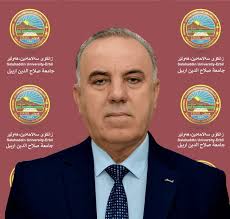
Dr. Rashad Rashid Haji
The Mathematics Department is led by Dr. Rashad Rashid Haji, a distinguished academic with expertise in pure mathematics. Dr. Rashad has contributed significantly to curriculum development and national teaching standards over 30 years in higher education. Their leadership fosters innovation, inclusivity, and a strong focus on research-led teaching, emphasizing student-centered learning. Under their guidance, the department has expanded its academic offerings, increased collaborations with secondary schools, and introduced strategies to enhance teaching effectiveness.
The Mathematics Department aims to provide high-quality education that equips future educators with strong mathematical and pedagogical skills. The department fosters analytical thinking, effective communication, and the real-world application of mathematics in educational contexts. Its vision is to lead mathematics education through innovation, impactful research, and community engagement. By preparing educators to address diverse learning environments, the department contributes to the development of a mathematically literate society.
Graduates of the Mathematics Department will have a comprehensive understanding of key mathematical concepts and the ability to apply them in Mathematical settings. They will be skilled in lesson planning, classroom management, and using digital tools to enhance mathematics instruction. Students will also develop strong problem-solving and communication skills, preparing them for teaching and lifelong learning. By the end of the program, graduates will be well-equipped to improve mathematics education in schools and pursue further professional development.
The Mathematics Department fosters collaboration with local schools, educational authorities, and international academic institutions to enhance teaching and learning. These partnerships offer opportunities for student placements, curriculum development, joint research, and professional development workshops. Students gain hands-on classroom experience and mentorship from experienced educators through these connections. Collaborative projects focus on improving teaching practices, integrating technology, and addressing achievement gaps in mathematics education.
Degree Program Overview
The undergraduate program provides a well-rounded education in mathematics and teaching methodology. Students are trained to understand and teach mathematical concepts at various educational levels, particularly in basic and secondary schools. The program combines content mastery with pedagogical training, equipping students to design effective lesson plans, manage classrooms, and assess student learning outcomes. Field experience and teaching practice are key components, giving students the chance to apply theory in real-life settings.
Postgraduate Studies
Postgraduate programs cater to educators, researchers, and professionals aiming to advance their careers or contribute to scholarly work in mathematics education. Programs such as the Postgraduate Diploma, Master of Mathematics (M.Sc.), and Doctor of Philosophy (Ph.D.) focus on advanced research, policy analysis, and instructional leadership. Students benefit from mentorship, access to research resources, and collaborative projects. Postgraduate studies enhance academic qualifications and empower graduates to influence educational practices and reforms on a broader scale.
Program Offerings
- Master of Science (M.Sc.) in Biology
- Molecular Biology
- Microbiology
- Physiology
- Zoology
- Botany
- Specialized Subfields
- Coursework (60 ECTS): Advanced topics in biology tailored to the student's area of specialization.
- Research Thesis (60 ECTS): An independent research project culminating in a thesis defense.
- Demonstrate advanced knowledge in their chosen field of biology.
- Design, conduct, and analyze biological research using appropriate methodologies.
- Communicate scientific findings effectively in written and oral formats.
- Apply critical thinking to address biological problems.
- Work independently and collaboratively in research settings.
- Doctor of Philosophy (Ph.D.) in Biology
- Advanced Coursework (30 ECTS): Topics tailored to support the research project.
- Research and Dissertation (150 ECTS): Original research culminating in a dissertation and defense.
- Conduct independent, original research that contributes to the body of knowledge in biology.
- Demonstrate expertise in a specialized area of biology.
- Publish research findings in peer-reviewed journals.
- Exhibit advanced problem-solving and critical-thinking skills.
- Lead research projects and mentor junior researchers.
- Bachelor’s degree in biology or a closely related field.
- Minimum academic performance by university regulations.
- Proficiency in English (demonstrated through tests like IELTS or TOEFL).
- Successful performance in the entrance exam and interview.
- Master’s degree in biology or a related discipline.
- Proven research experience, preferably with publications in scientific journals.
- Submission of a detailed research proposal aligned with the department’s expertise.
- Proficiency in English (demonstrated through tests like IELTS or TOEFL).
- Successful performance in the entrance exam and interview.
The M.Sc. program is designed to provide students with advanced theoretical knowledge and practical research skills in various biological disciplines. The program emphasizes coursework and research to prepare students for academic, industrial, or governmental careers in biology.
Focus Areas:ECTS Distribution:
The program is structured to include 120 ECTS over two academic years:
Learning Outcomes:
Graduates of the M.Sc. program will:
The Ph.D. program focuses on original research contributions to the field of biology, aiming to develop experts capable of advancing biological sciences through innovative and impactful research.
Specialization Areas:Students work closely with faculty mentors to focus on a specific research area within biology, such as genetics, ecology, or biochemistry.
ECTS Distribution:The Ph.D. program requires 180 ECTS, typically completed over three to four years:
Graduates of the Ph.D. program will:
The department has modern laboratories, research tools, and computational resources to support postgraduate students’ academic journeys. Collaborative opportunities with national and international institutions are also available, encouraging interdisciplinary research and innovation.
The postgraduate programs are designed to empower students to become leaders in their respective fields, whether in academia, industry, or public service and contribute meaningfully to advancing biological sciences.
Program learning outcome
Graduates of the Mathematics Department will have a comprehensive understanding of key mathematical concepts and the ability to apply them in Mathematical settings. They will be skilled in lesson planning, classroom management, and using digital tools to enhance mathematics instruction. Students will also develop strong problem-solving and communication skills, preparing them for teaching and lifelong learning. By the end of the program, graduates will be well-equipped to improve mathematics education in schools and pursue further professional development.
Course catalog
Coming Soon
Admissions
Admission is open to students who meet the academic and ethical standards set by the College of Education. For undergraduate entry, candidates must have completed secondary education with strong performance in mathematics and related subjects. Postgraduate applicants must possess a recognized bachelor's degree in mathematics or education-related fields. Additional requirements may include professional teaching experience, a personal statement, and academic references.
Alumni
The department offers career services to help students achieve their professional goals. Personalized career counseling, resume workshops, and mock interviews prepare students for careers in education and related fields. We work closely with schools to connect graduates with job opportunities. Career fairs, alumni talks, and industry panels expose students to diverse professional paths.
Graduate Employability
The Mathematics Department offers valuable internship opportunities to bridge theory with practice, internships with partner departments. Students apply pedagogical strategies, conduct assessments, and engage in lesson planning under experienced Math supervision. These internships significantly enhance employability and often lead to job offers after graduation.
The Mathematics Department at our college is proud of its strong record of academic publication and research.
Department members regularly contribute to esteemed national and international journals, covering areas such as pure mathematics, applied mathematics, and data science.
Recent publications reflect innovative work in algebra, differential equations, and mathematical modeling.
Students are also encouraged to engage in research, with many co-authoring papers and presenting at conferences.
These scholarly achievements highlight the department’s commitment to advancing mathematical knowledge and academic excellence
Research projects
The Mathematics Department actively promotes research and scholarly publication among faculty and students. Our research focuses on mathematics pure and applied, learning technologies, assessment strategies, and the cognitive processes involved in learning mathematics. Department members collaborate on research projects, regularly publishing in peer-reviewed journals and presenting at national and international conferences. Students are encouraged to engage in research through guided projects, seminar presentations, and final-year thesis work.
The Mathematics Department supports dynamic research groups specializing in Algebra, Differential Equations, Graph Theory, and Topology.
These groups are dedicated to exploring both theoretical foundations and practical applications within their respective fields.
Department members actively publish their findings in respected journals and collaborate with national and international researchers.
Students are encouraged to participate in ongoing projects, gaining valuable experience and contributing to original research.
These focused research efforts strengthen the department’s academic profile and foster a culture of inquiry and excellence.
Opportunities for students
The Mathematics Department offers valuable internship opportunities to bridge theory with practice, internships with partner departments. Students apply pedagogical strategies, conduct assessments, and engage in lesson planning under experienced Math supervision. These internships significantly enhance employability and often lead to job offers after graduation.
Academic Advising
Academic advising plays a crucial role in helping students navigate their educational journey. Each student is assigned a department advisor to, academic planning, and career goals. Advisors provide mentorship on study habits, time management, and balancing academic and personal responsibilities. The advising system creates a supportive environment where students feel empowered and confident in their academic path.
Internship Opportunities
The Mathematics Department offers valuable internship opportunities to bridge theory with practice, internships with partner departments. Students apply pedagogical strategies, conduct assessments, and engage in lesson planning under experienced Math supervision. These internships significantly enhance employability and often lead to job offers after graduation.
Career Services
The department offers career services to help students achieve their professional goals. Personalized career counseling, resume workshops, and mock interviews prepare students for careers in education and related fields. We work closely with schools to connect graduates with job opportunities. Career fairs, alumni talks, and industry panels expose students to diverse professional paths.
Conferences and workshops
Coming SoonDepartment news
Coming SoonStudent news and activities
Coming SoonContact us
The Mathematics Department welcomes inquiries from prospective students, educators, and collaborators. Our administrative office is open Sunday through Thursday from 8:30 AM to 2:30 PM. Visitors can contact the department via phone and email. Our support staff is available to assist with admissions, academic advising, and other departmental services.